
Whether your QoR mini needs a refill, or you wish to use QoR colors in your tried-and-true travel palette, QoR tube paints work beautifully in pans and half pans. Due to QoR’s modern formula, the dry tube paint will re-wet easily and provide the intense saturation or quiet subtlety expected of a QoR watercolor. We … Read more

Home>Uncategorized> Watercolors > Filling Half Pans with QoR Watercolor

About Cathy Jennings
View all posts by Cathy Jennings --> Archive |  Cathy Jennings
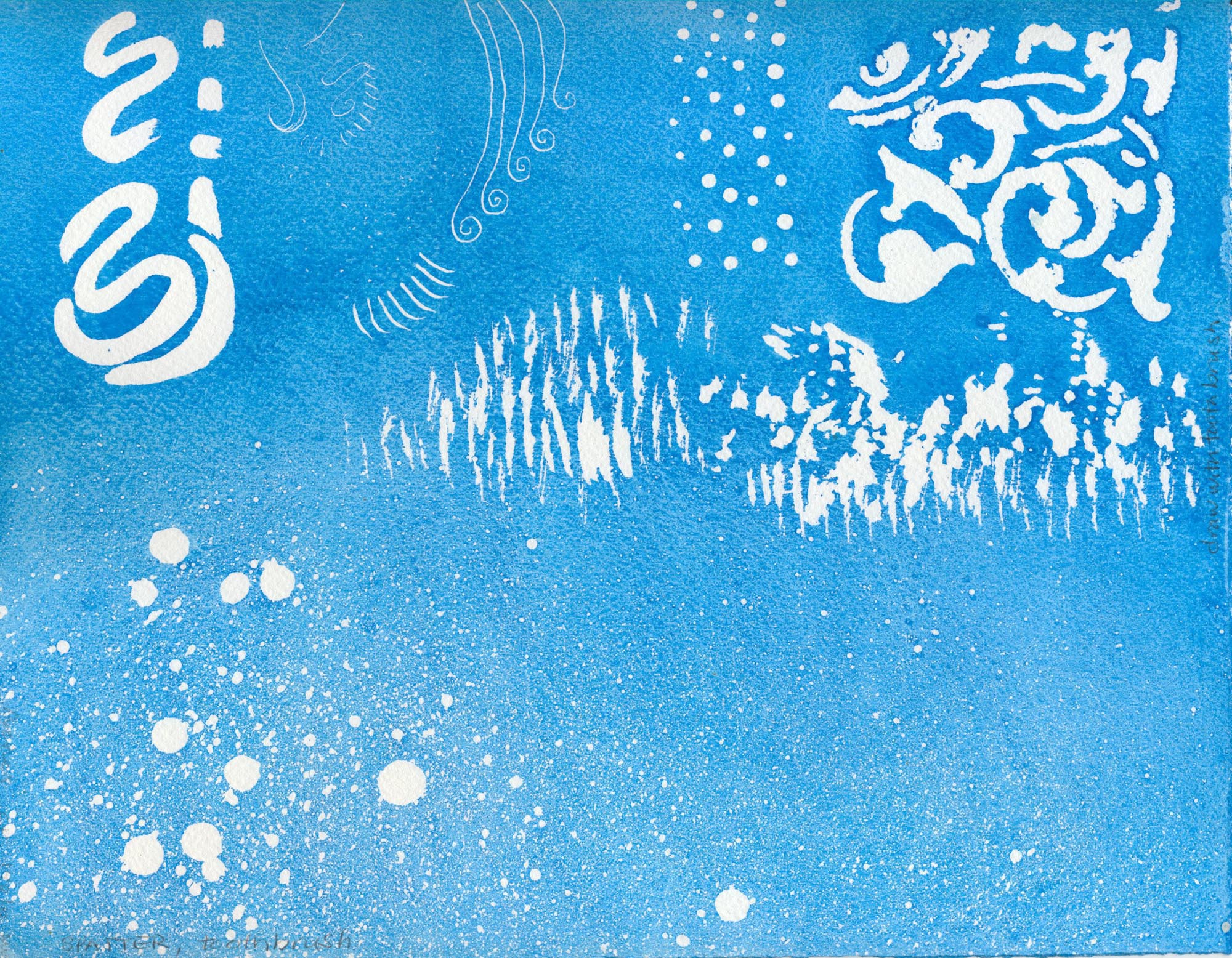
QoR Masking Fluid is a ready-to-use, removable liquid made with natural latex which may be applied to watercolor paper or watercolor ground before painting. Once dry, the Masking Fluid will resist paint, allowing watercolor artists to preserve fine details and lines of white paper that might be difficult to paint around in traditional transparent watercolor … Read more
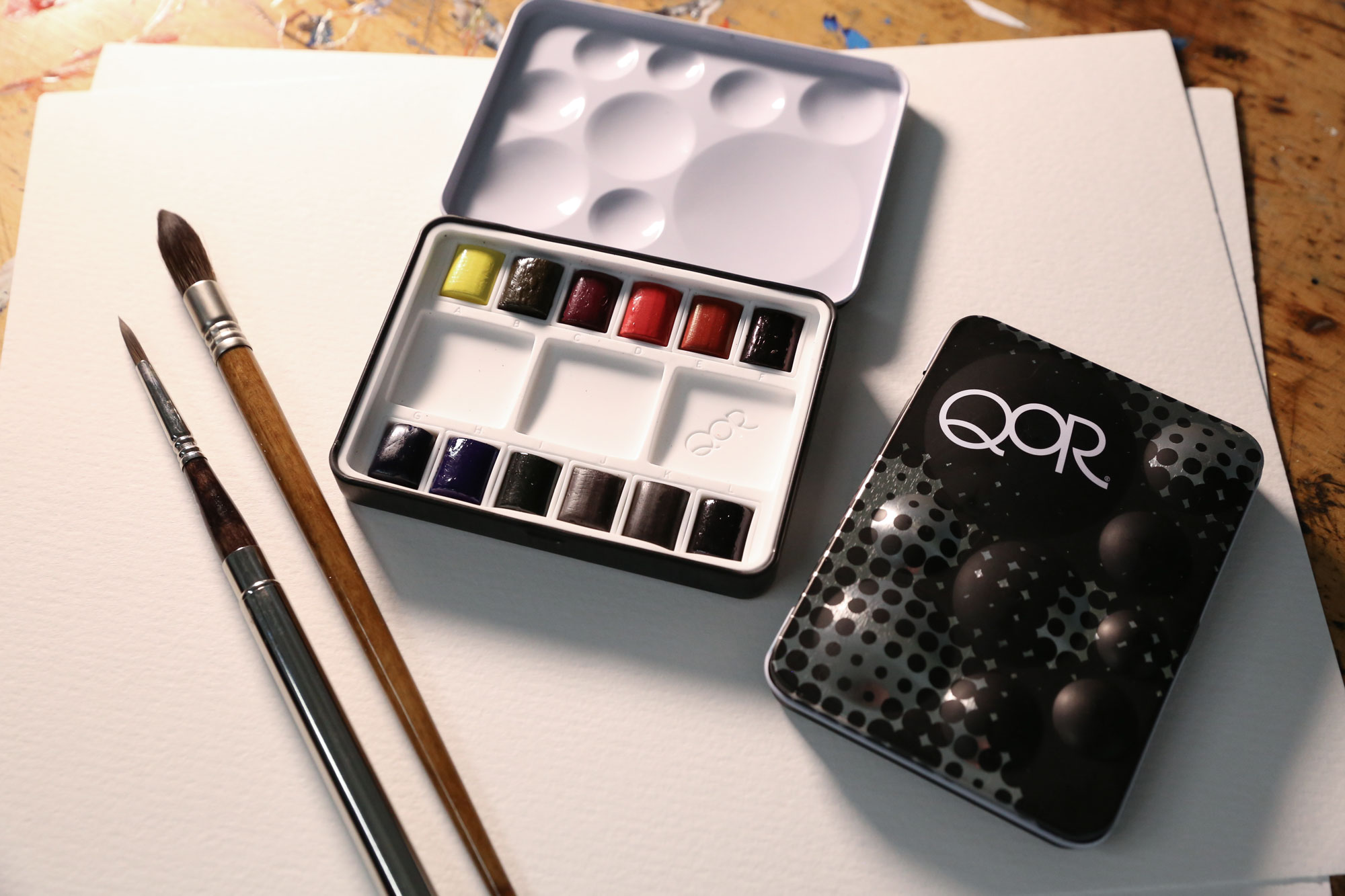
Editor’s Note: Due to artist feedback, we replaced the Cadmium in this set with Bismuth Vanadate Yellow. The impact to the mixing range is minimal. Introduction: If you seek an easy way to take watercolors on plein air painting adventures, the QoR mini with its half pans of luscious watercolors is awaiting your brush! The QoR mini is … Read more
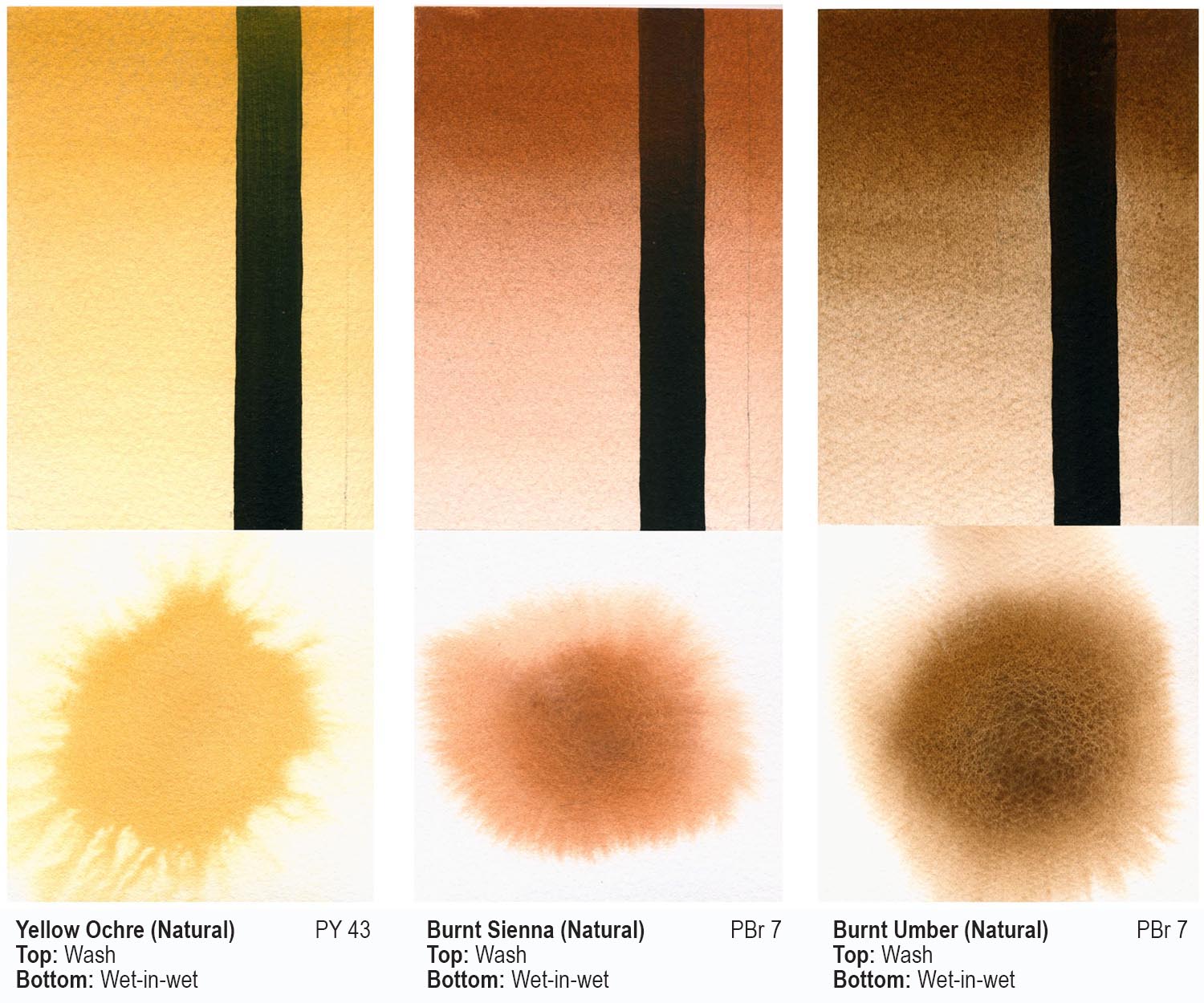
The description “earth pigment” originally indicated both a natural material mined from the earth, and ancient iron oxide colors dominated by browns, tans, golden yellows, and rusty oranges. These are the painters’ traditional Sienna, Ochre, and Umber color families. Natural pigments now have synthetic siblings that greatly expand the earth color family. Synthetic iron oxides … Read more
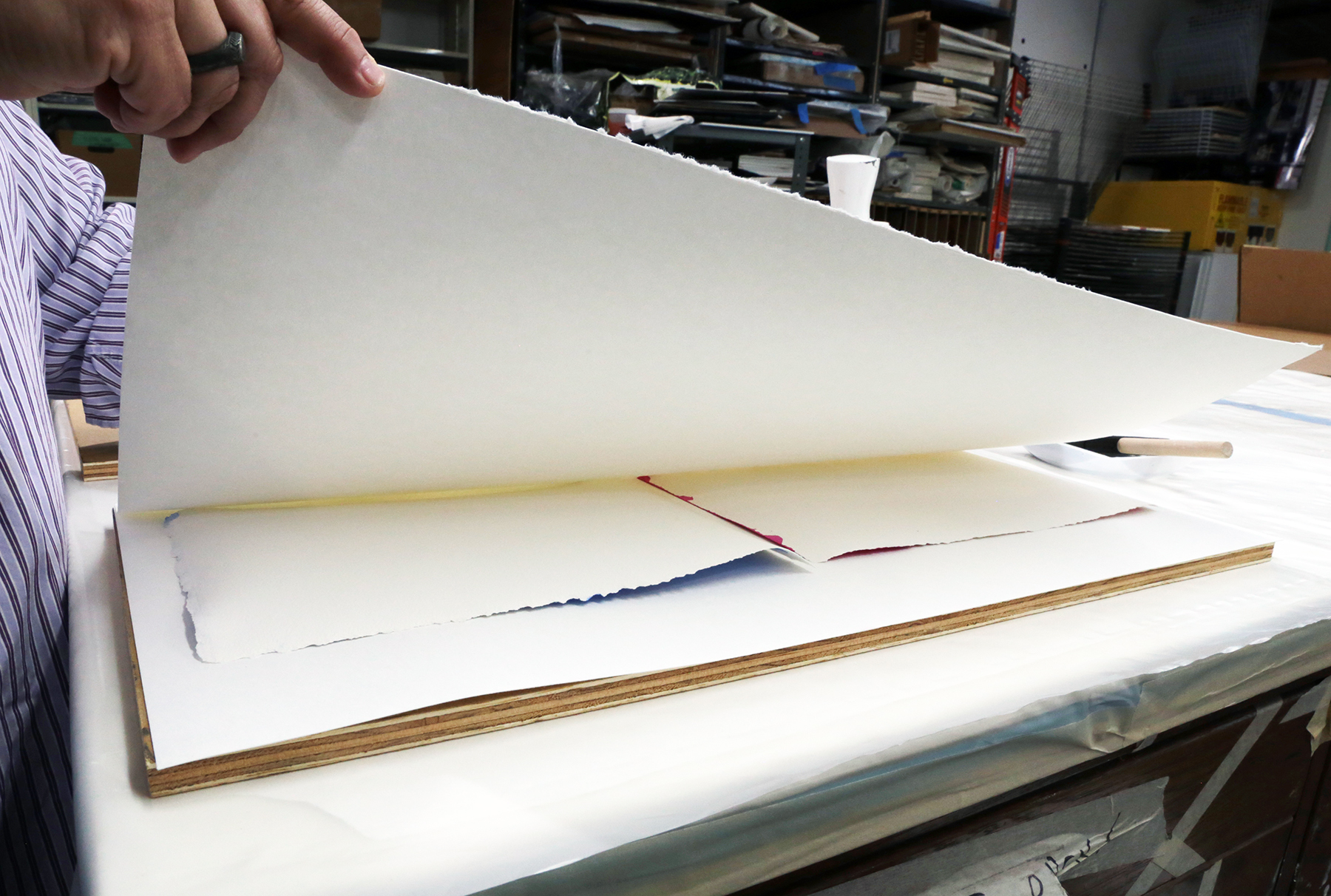
When painting on watercolor paper with transparent watercolor, the paper often buckles and stays that way once the painting is dry. This article offers one possible way to flatten the paper using a temporary ‘paper press.’ This method is appropriate for paintings composed of thinly applied glazes and washes of transparent watercolor on paper, and … Read more
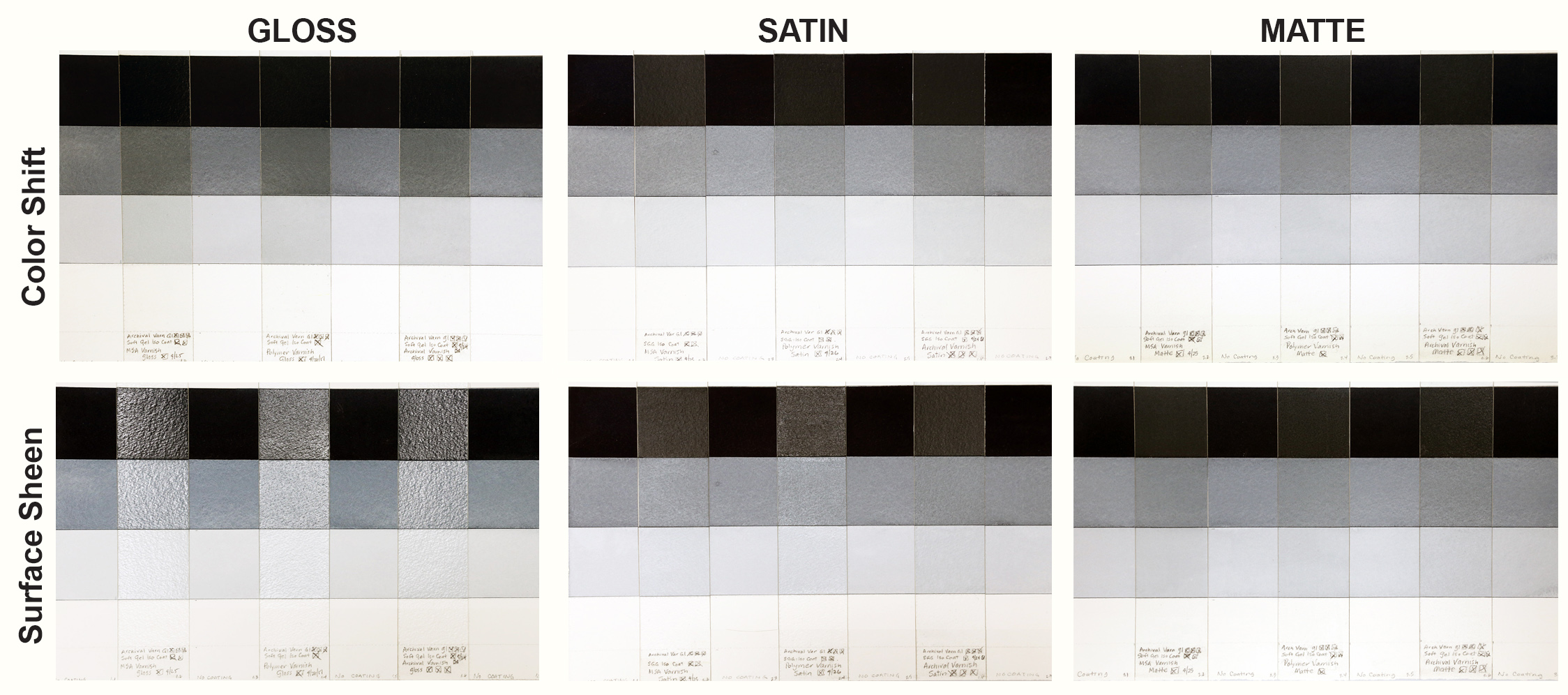
This article briefly explores the permanent changes created by varnishing transparent watercolor on paper, in particular the aesthetic changes to color, value, texture, and sheen. Keep in mind that varnishing also changes the nature of the painting through the permanent addition of acrylic. While there are several approaches to varnishing watercolor, we only focused on … Read more
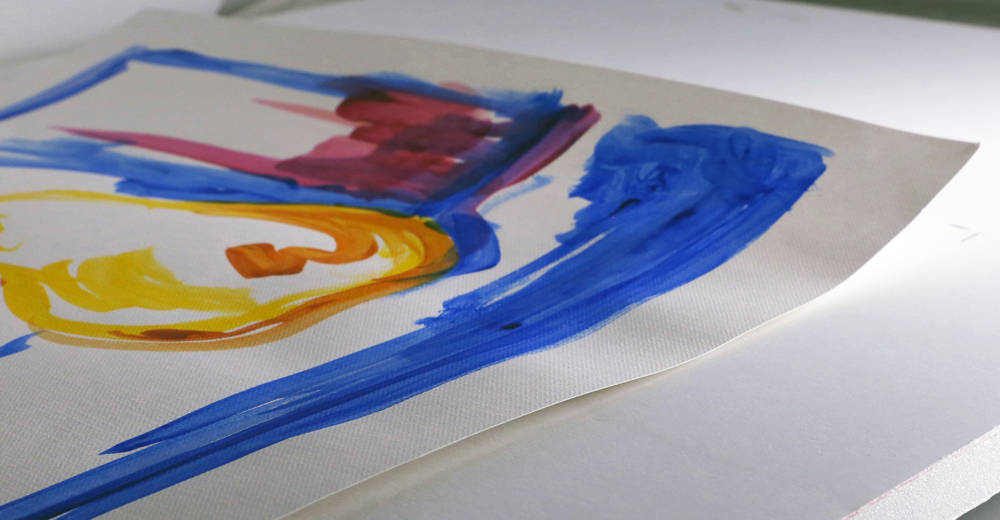
When water is applied to paper, the fibers can soak up liquid and expand. This may create the infamous buckles and cockles that can be the bane (or joy) of those who paint with watermedia. This article reports on what happened when High Flow Acrylics and Heavy Body Acrylics were applied to Arches 140 lb. … Read more
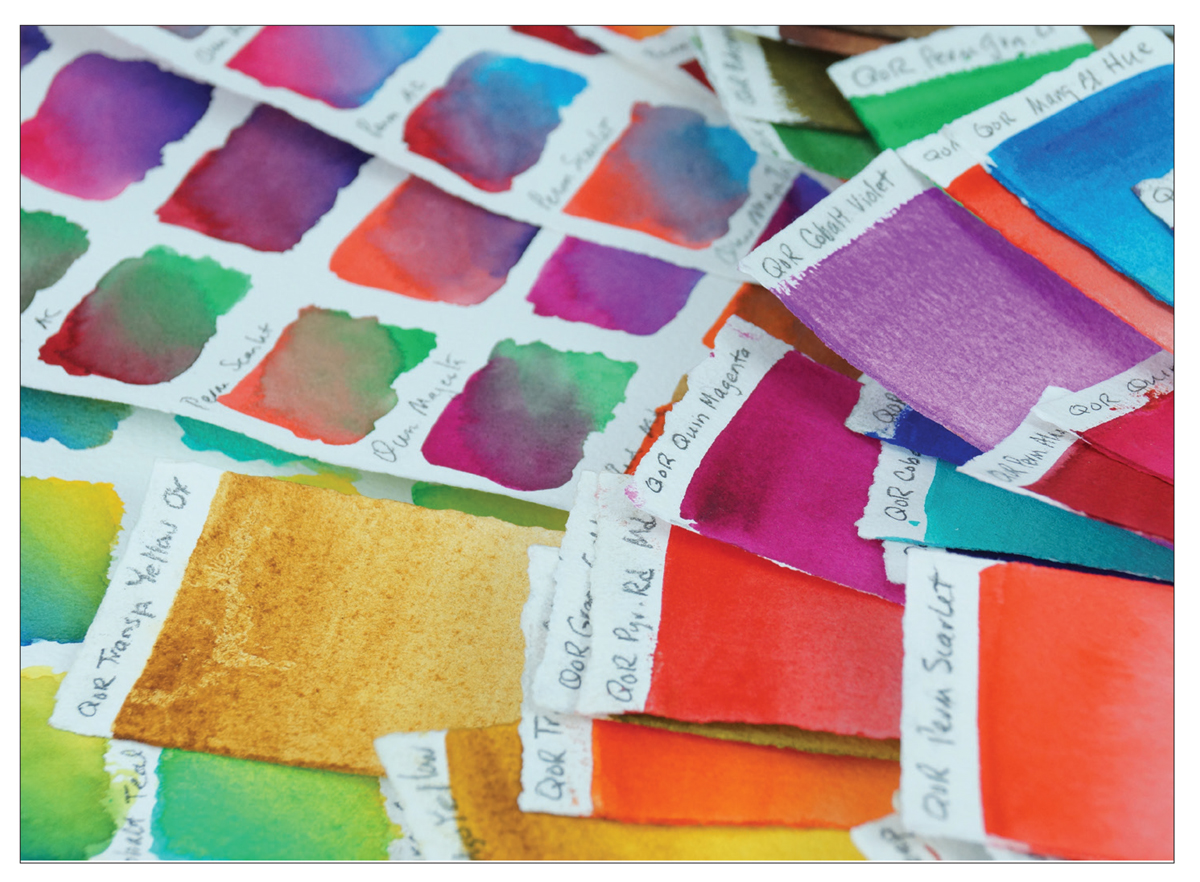
Dirt damages the beautiful surface of watercolor on paper, and ultraviolet light fades delicate washes. Watercolor paintings need protection when on display. Acrylic sheeting and art conservation glazing options have widened the choices beyond traditional framing behind glass. However, museum-grade UV non-reflective glass and acrylic glazing can be expensive and add weight when shipping artwork. … Read more
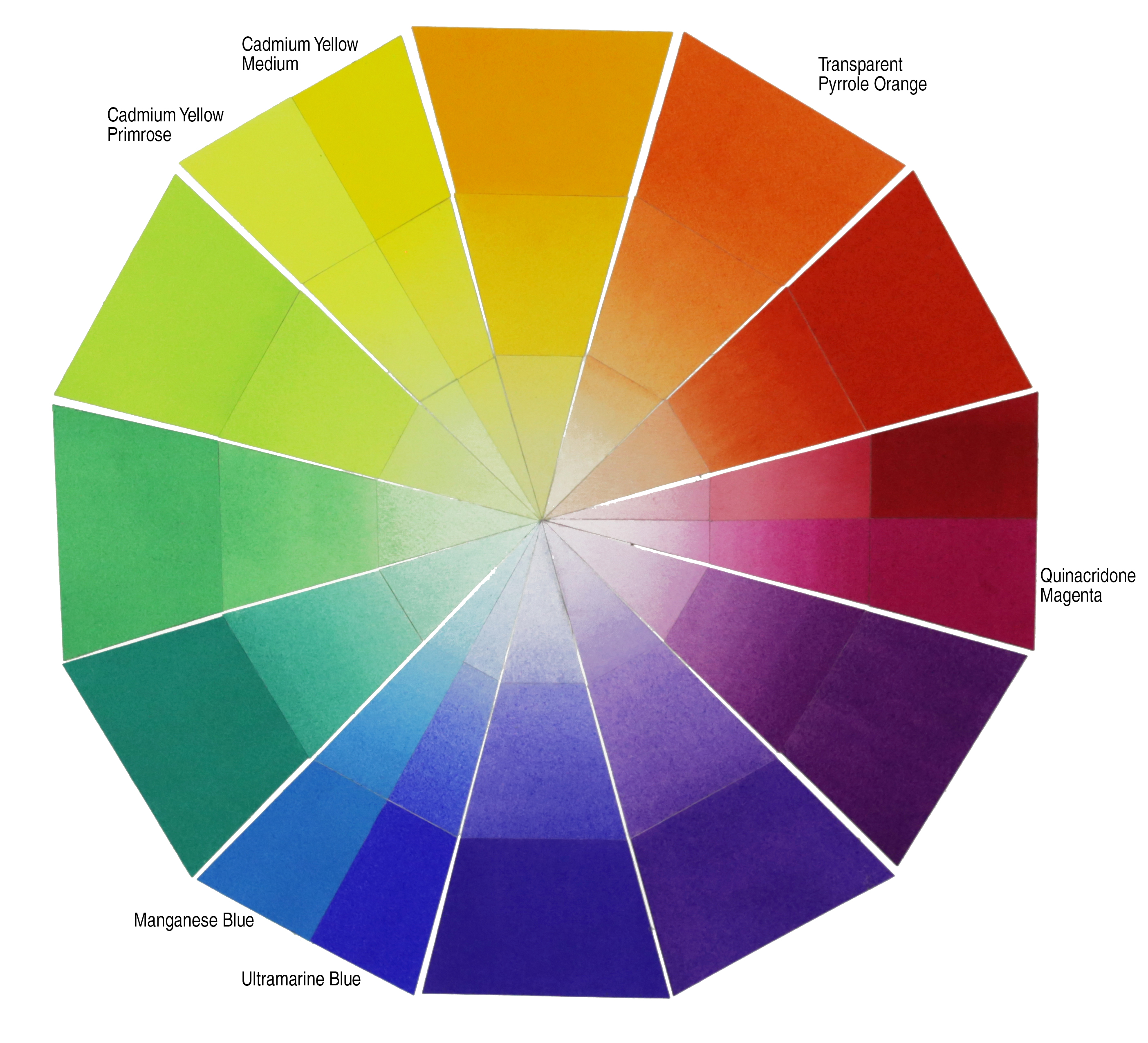
The March 2016 article “Painting on Location with QoR Modern Watercolors” included a suggested palette of six QoR paints selected for their own attributes and for their ability to create a spectrum of beautiful saturated colors. This article will first discuss the selection process, and then demonstrate the paints’ mixing potential when organized around an … Read more
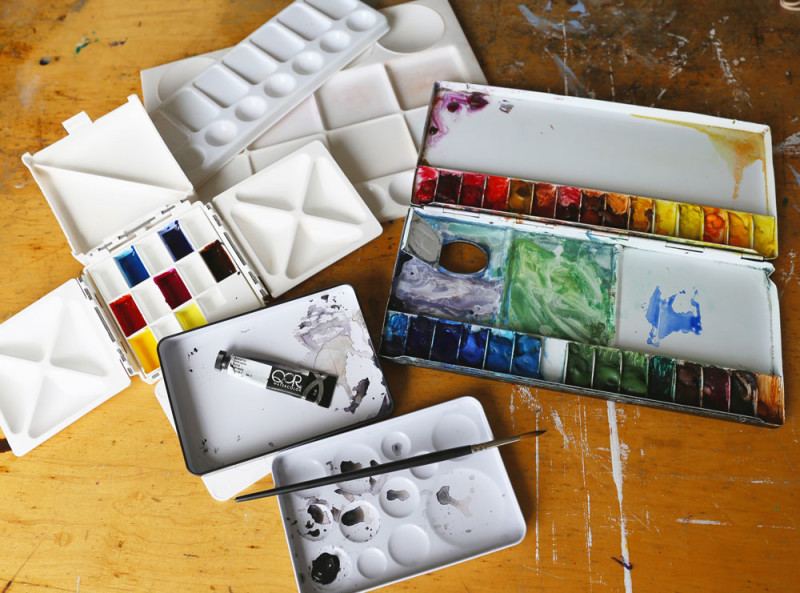
When first painting with your watercolors outside, there are a few things you will definitely need, and other items that can ease your way: paint, a mixing surface or palette, water and water container, a brush, and watercolor paper on a support of some kind are the minimum things you need. Picnic tables, benches, boulders, … Read more
