
Introduction
Many artists use GOLDEN acrylics in markers, but what about QoR Watercolors in refillable paint markers? Since the markers rely on fluid paint, watercolor seems a perfect medium for these tools. QoR Artist Watercolor offers high lightfastness and dissolves into water beautifully, making it perfect for versatile marker techniques. In our testing, we found do-it-yourself watercolor markers can be a convenient and enjoyable way to create paintings and sketches. This article will explain how to fill a paint marker with tube watercolor, briefly touch on types of markers and pens, and introduce some results when these tools are used on various surfaces. The captions under images contain further information on materials and applications used.
Making Your Own Watercolor Markers
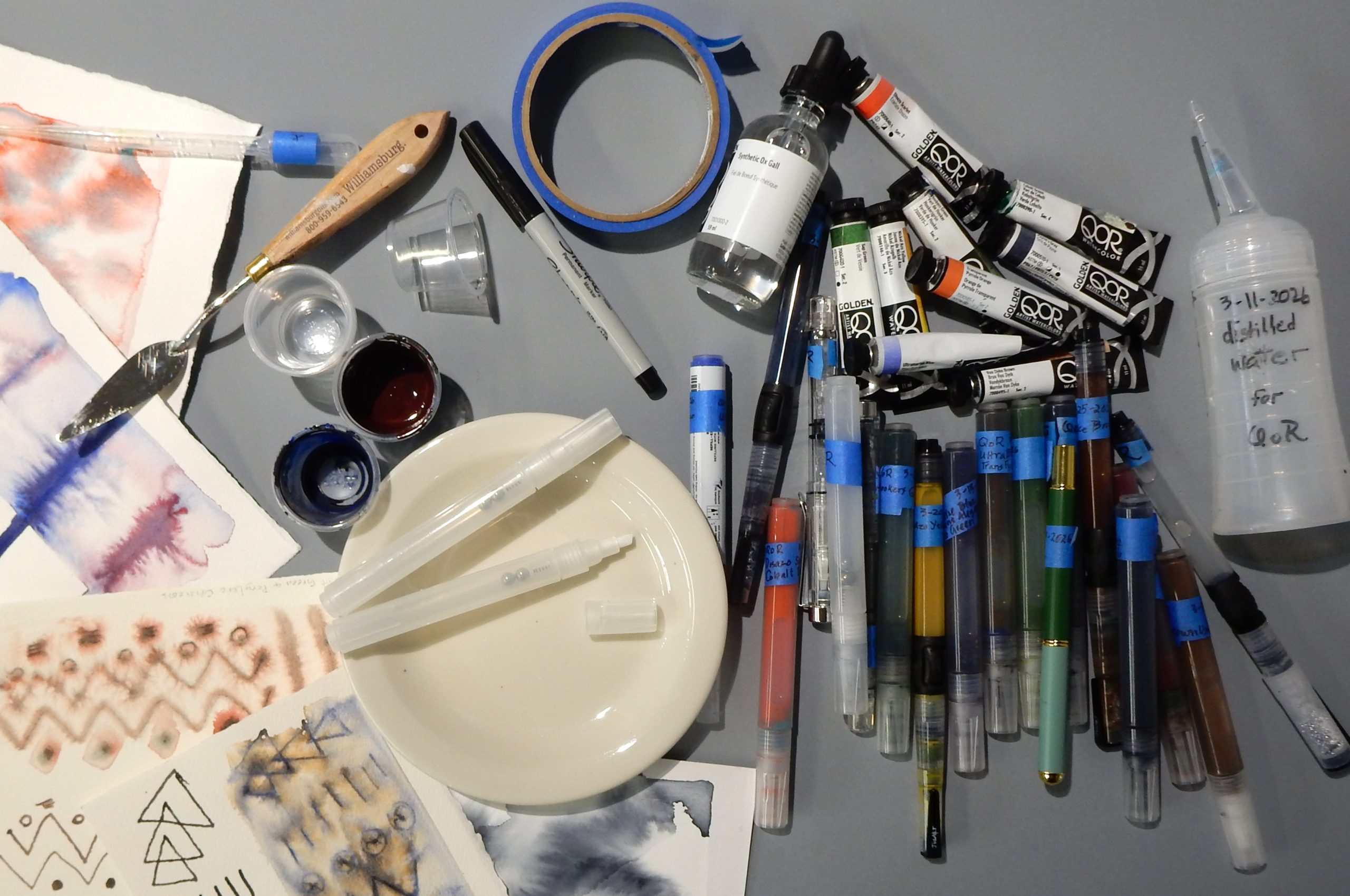
We found empty paint markers, available at most art supply stores, to be the most straightforward and durable of the tools we tested. Because of this, markers will be featured heavily in this article. Transparent barrels make it easier to judge how much paint you have left in a marker. Watercolor paint will need to be pre-diluted with water in a small flexible container before being poured into the barrel of a disassembled paint marker. When using more than one color in a marker, it can be helpful to pre-blend before diluting so the color of the mix may be tested and more paint added if needed. Remember that QoR is a strong paint, and not a lot of color will be needed for a marker.
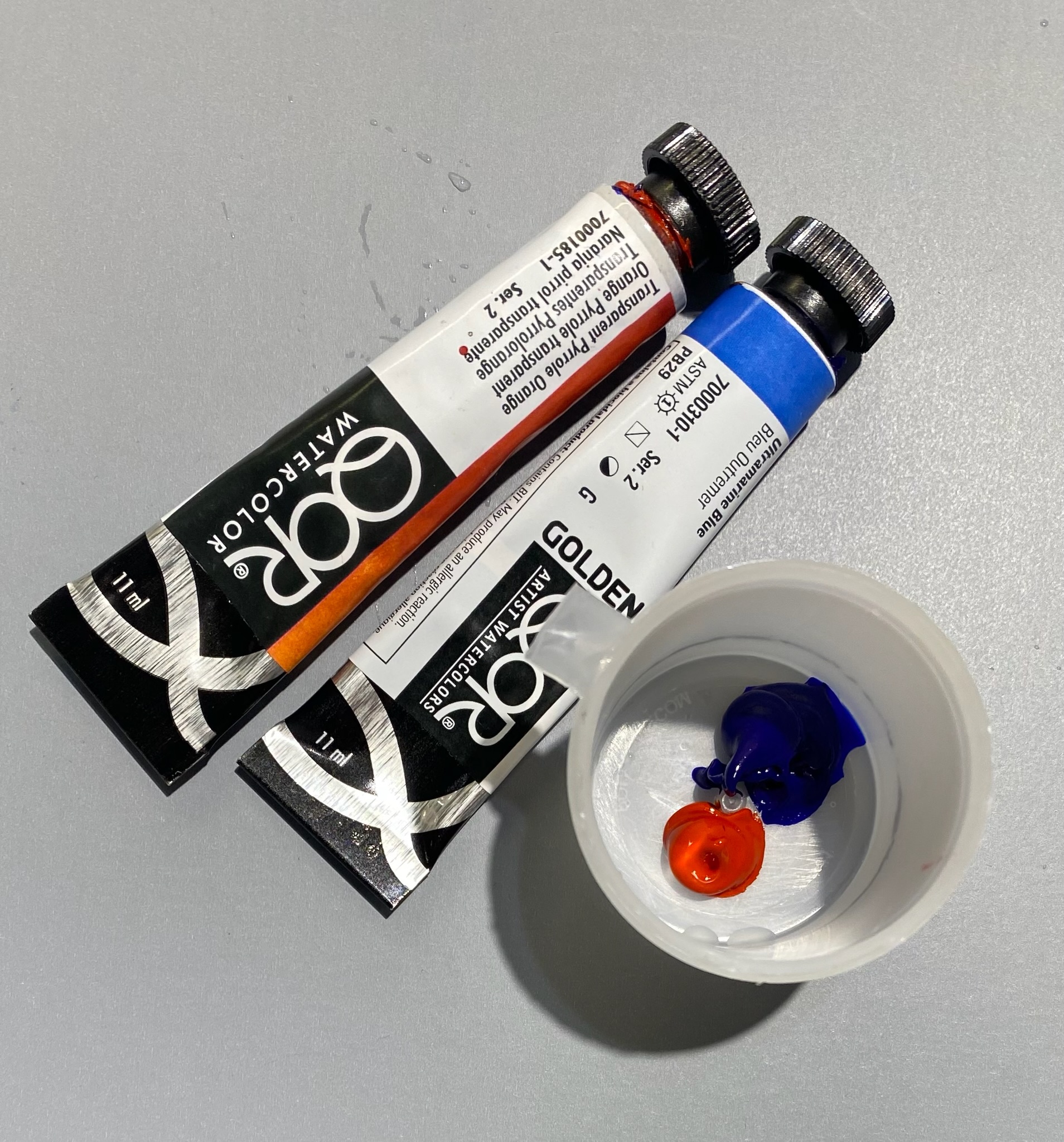
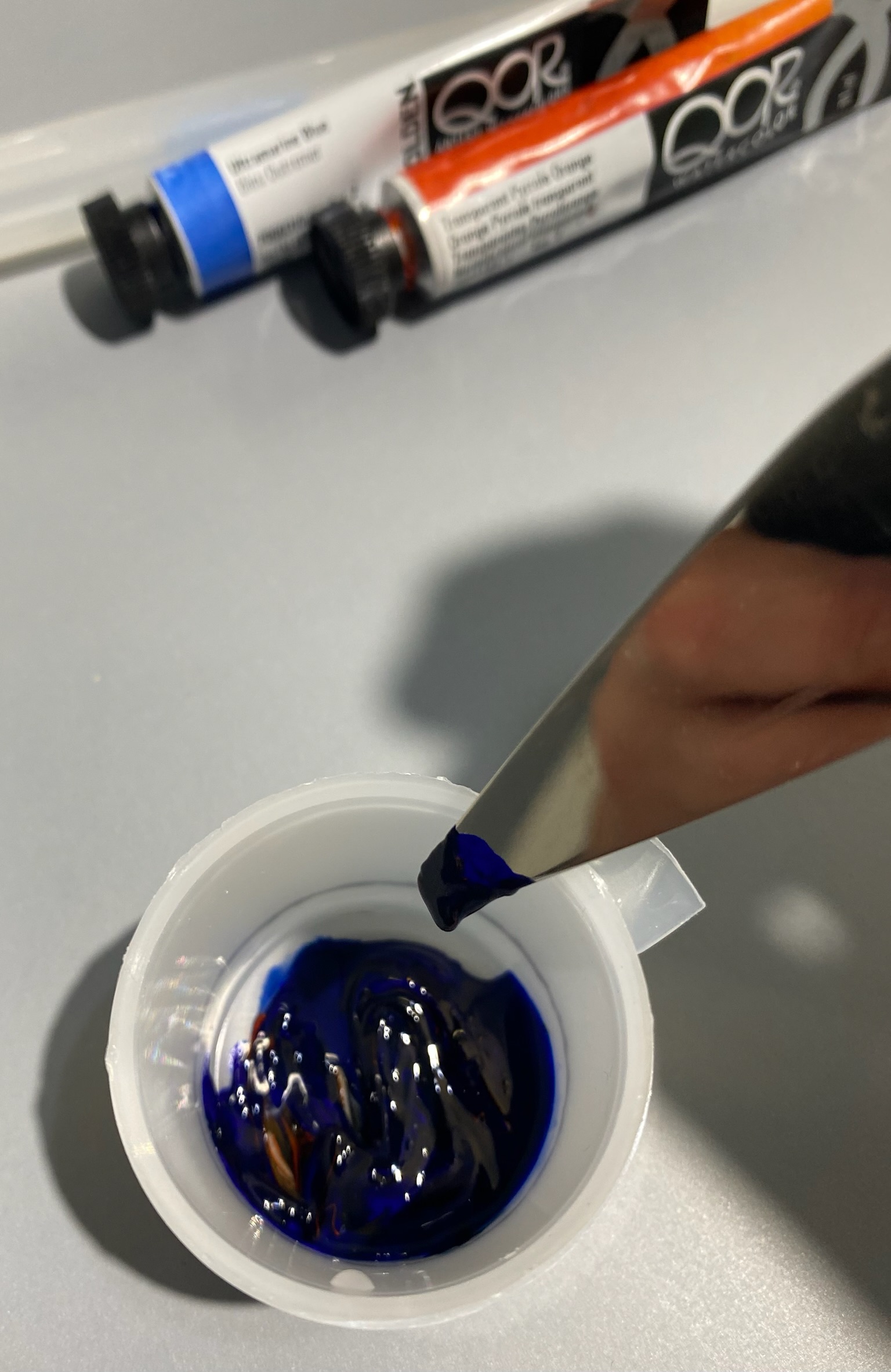
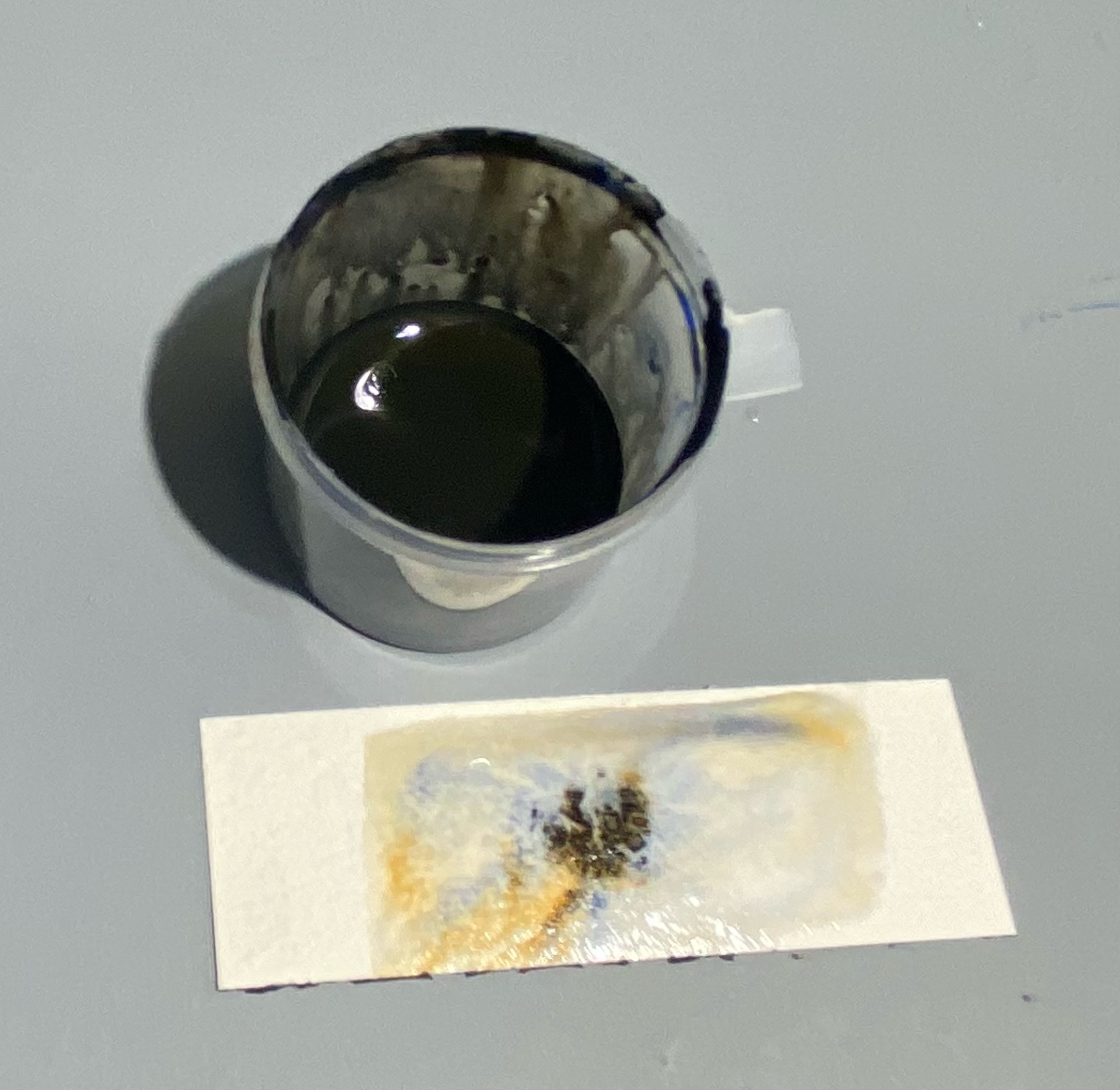
Diluting QoR Watercolor For Use in a Paint Marker
Blend water into color gradually, being sure to fully incorporate. When the consistency is diluted to a viscosity no thicker than light cream, use a brush to test the paint on scraps of wet and dry paper.
The ratio of paint to water impacts the strength and transparency of the color and the flow of the paint, just as when painting with a brush. Add more water if the mixture does not seem to flow easily or if the color needs more dilution. Recheck the mixture on dry and wet paper to see if it has the desired translucency, color, and movement.
Filling the Paint Marker with QoR Watercolor
When the paint has reached the desired dilution, take the empty marker apart over a surface or container where pieces will not escape. We often use a thrift store plate or a tray.
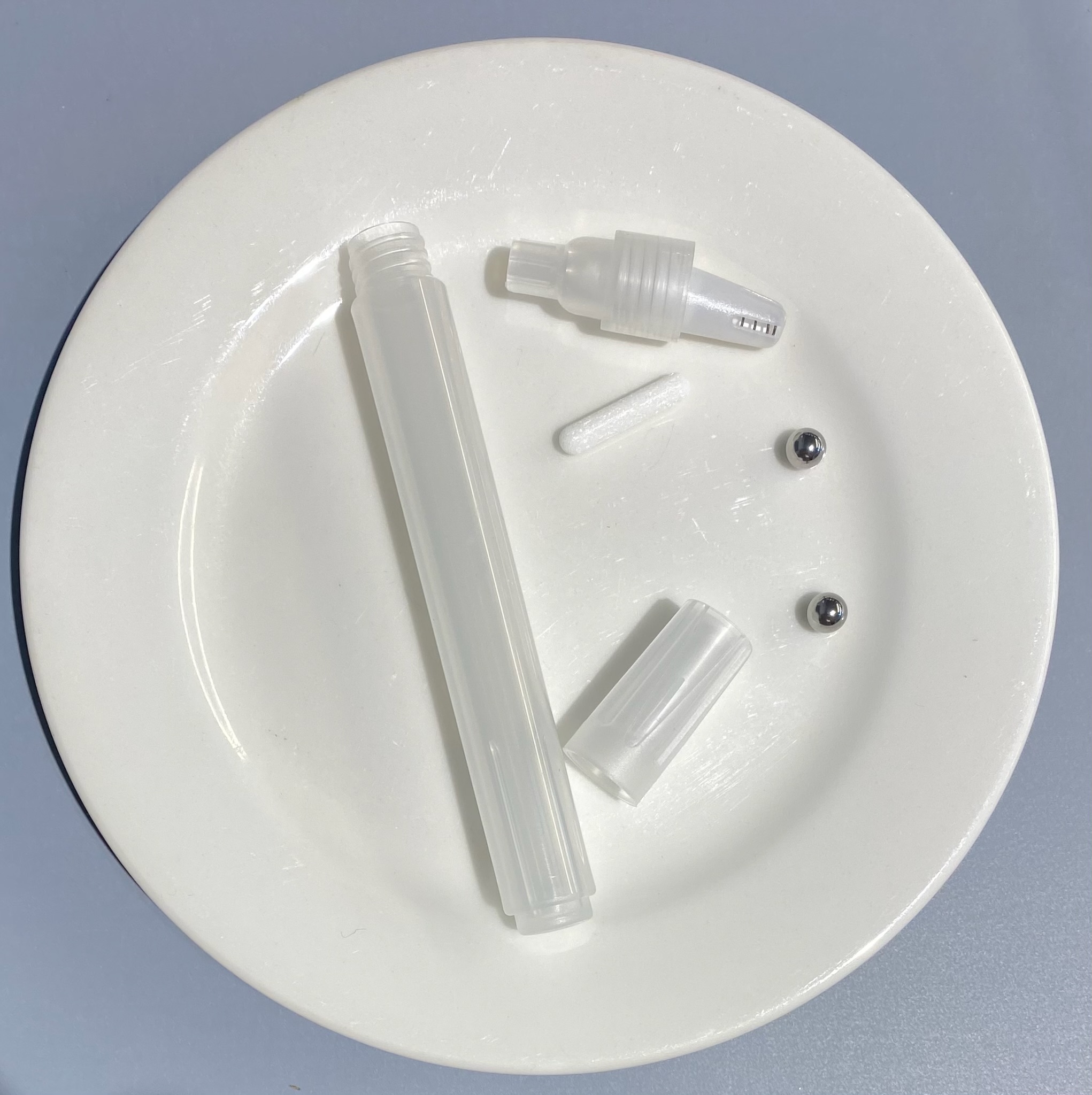
Now it is time to fill the marker. Stir the diluted watercolor one more time, then take the barrel of the disassembled paint marker in one hand and your mixing container holding the diluted paint in the other. Gently squeeze the sides of the mixing jar to create a ‘v’ and pour from that into the barrel of the marker. This can be messy, and it might be good to wear gloves and pour over a sink or covered surface.
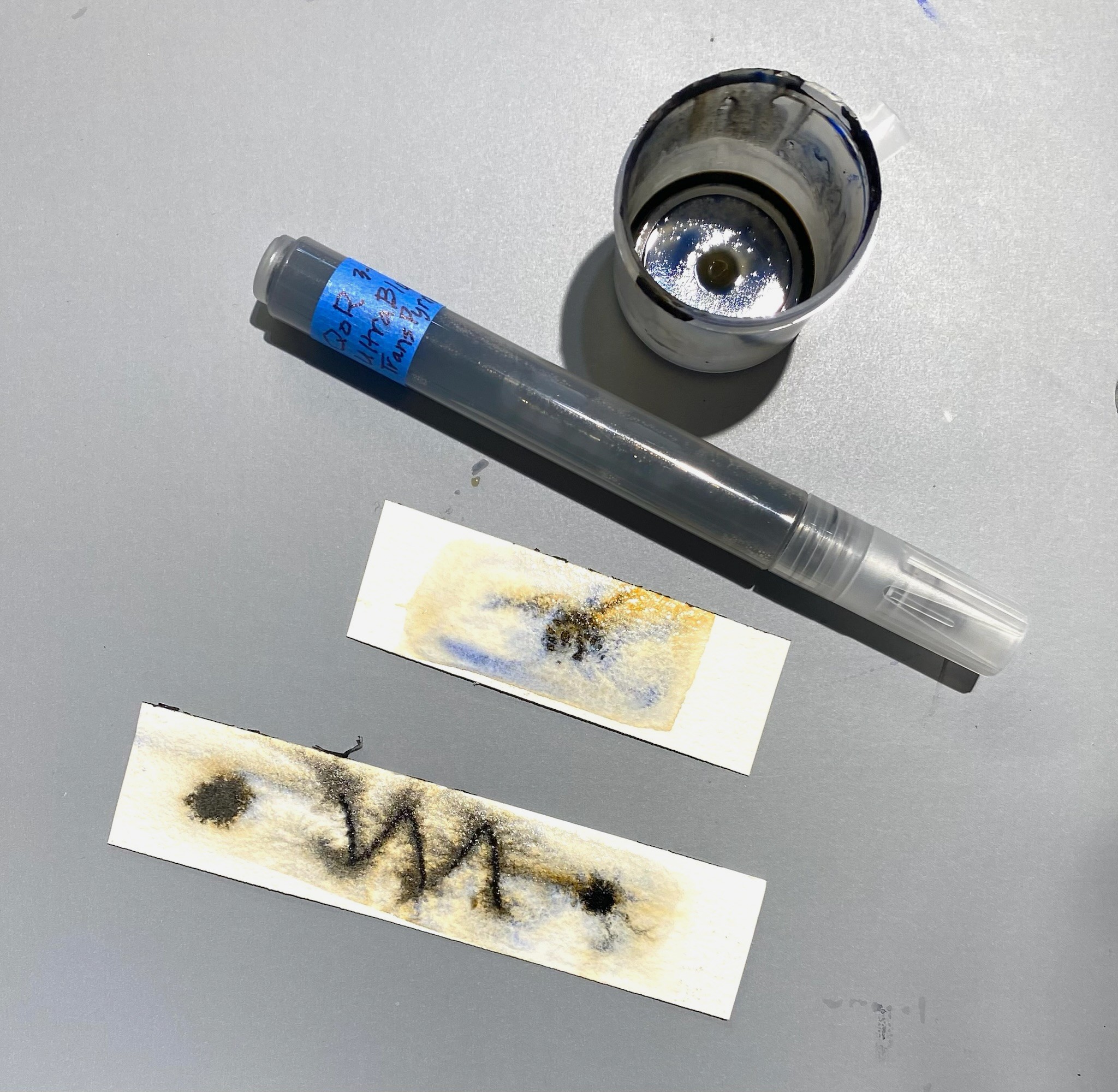
Stop pouring a bit before the paint nears the top of the barrel or paint will be squished out when the marker is put back together. Reassemble the marker and rinse any paint from the outside so your hands stay clean when using it. When the barrel is dry, write the date and paint color(s) on a piece of tape and wrap this ‘label’ around the barrel to document what is inside.
Dilutions and Techniques for Lights and Darks
When adding paint to your marker, consider both the dilution of your mixes and the surface on which you will be painting. We found that when working on a wet surface, less dilution and stronger color can be helpful since the water on the surface further dilutes the paint. When using a marker on dry surfaces, diluting to a less intense and more translucent color will allow for layering applications to intensify color. This is a technique familiar to those who build up layers when painting with watercolor and a brush.
Paint Personalities Can Matter
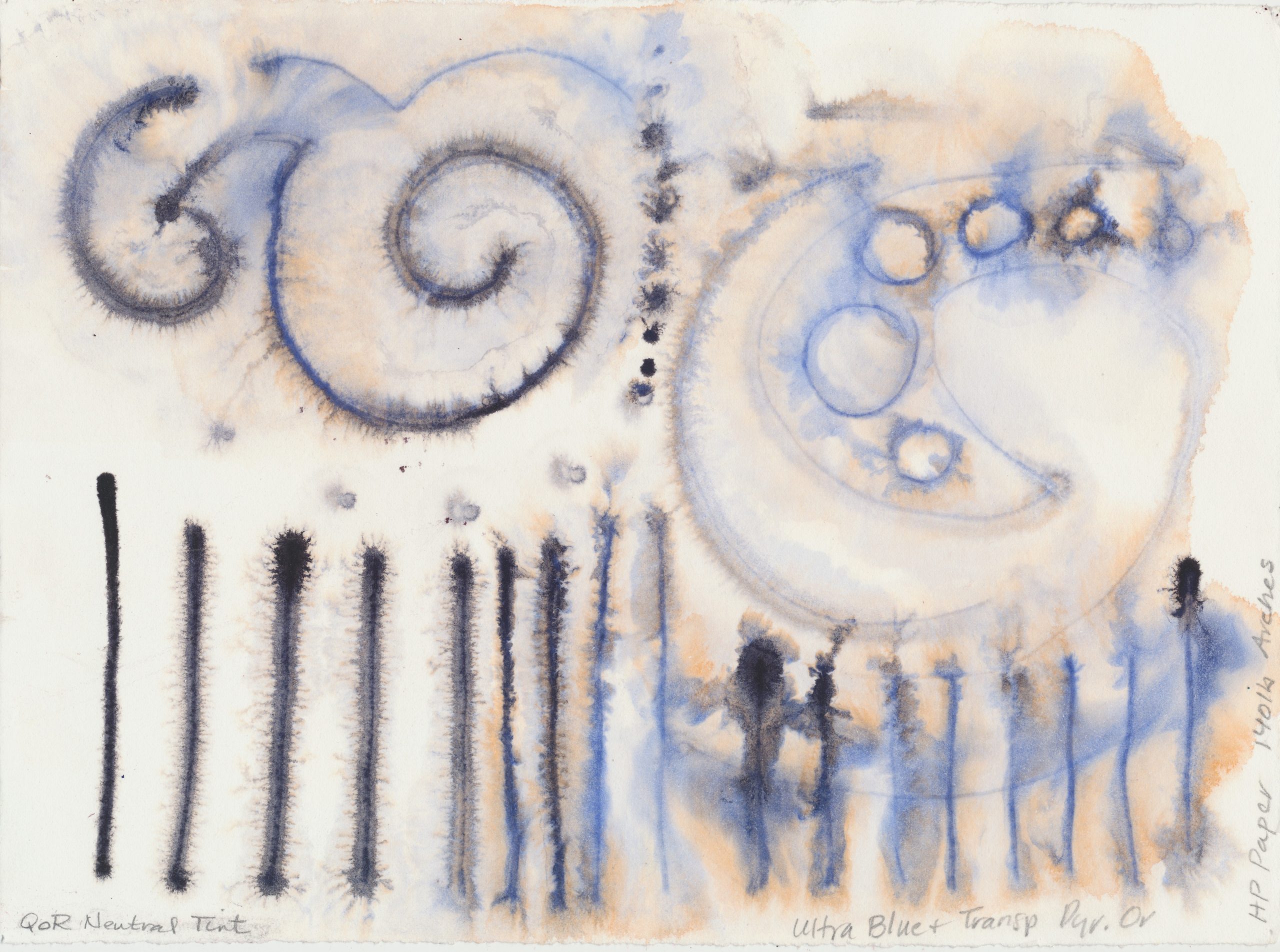
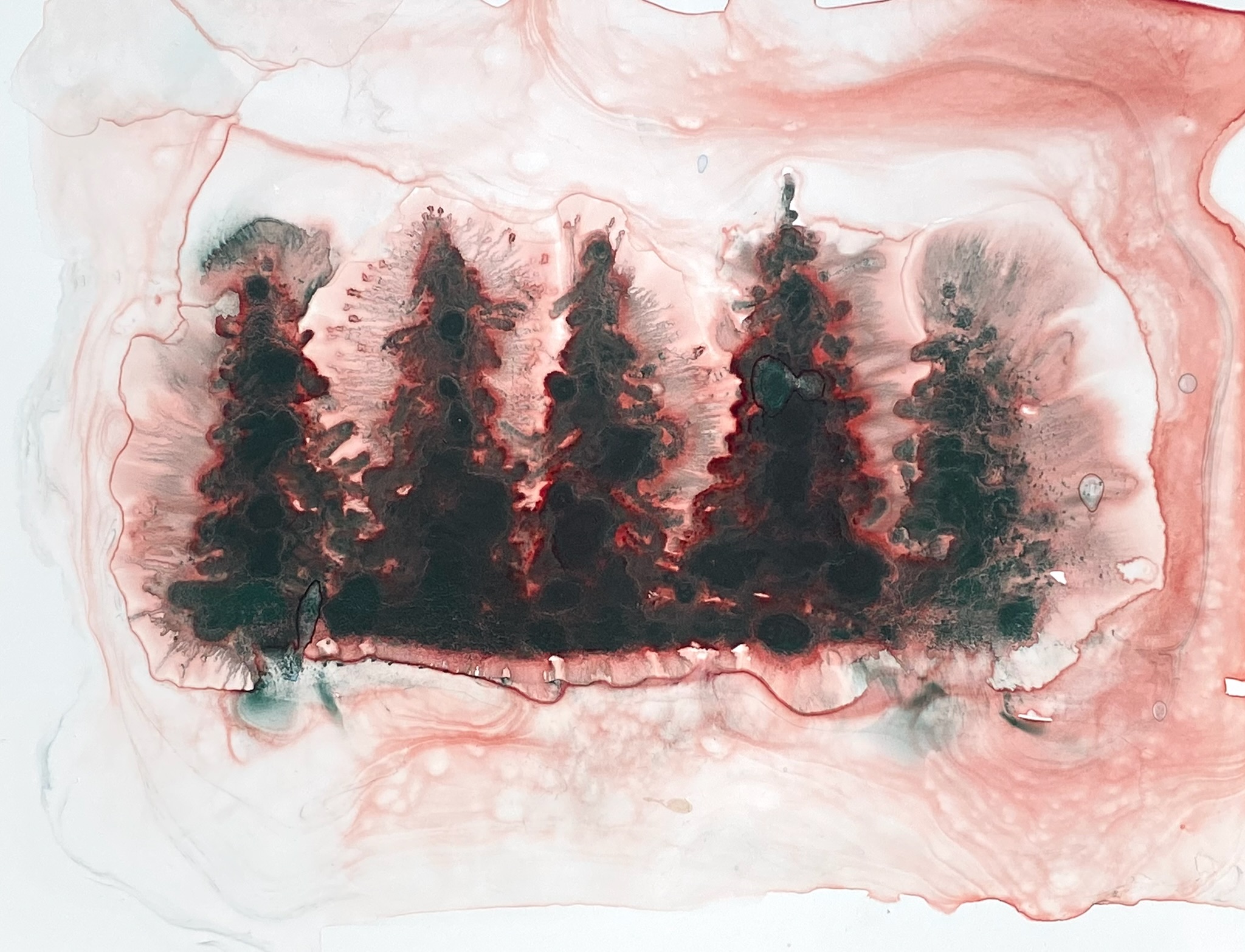
Individual QoR Watercolor paints move at different speeds and distances when used on a wet surface, and this trait can be exploited when newly filled markers touch wet surfaces. Using granulating and non-granulating paints in the same blend may increase color separation and aesthetic impact. This can be seen in Image 7, where the Transparent Pyrrole Orange moves more quickly than the granulating Ultramarine Blue on the wet surfaces. Whether you plan to work on wet or dry surfaces, we recommend testing small mixes before making diluted watercolor for use in a marker.
Pre-made paint blends or multi-paint markers that have been stored for many months might not separate the same way when used on a wet surface. Image 8 (below) shows the different behavior of a marker of diluted QoR Neutral Tint, which contains three pigments, compared to a marker containing a new mix of QoR Ultramarine Blue and Transparent Pyrrole Orange. In Images 1, 12, 13, and 17 the marker lines and dashes drawn with new two-paint mixes also demonstrate how individual colors move differently over wet surfaces.
Types of Nibs for Markers
The most common marker nibs are ‘bullet’ which are rounded or ‘chisel’ which are angled. These come in different sizes and make different types of marks. Some marker companies have replacement nibs which can be interchangeable. Just slip out a nib and replace it with the same or a different style nib of the same size—while holding the marker’s nib end upright or the paint will escape.
In addition, some refillable paint markers have brush-shaped nibs. ‘Brush’ nibs for markers are usually a single flexible form rather than a brush head with actual separate bristles or hairs. We found the brush nib to be the easiest to use for painting and the least likely to bruise still-damp paper, perhaps because it comes closest to acting like a brush. Areas of bruised paper can be seen in Image 8 above; they are the darker thin lines of color inside the wider lines of spreading paint. Image 9 below contains examples of markers and brush pens.
Using Watercolor Paint in Markers and Brush Pens
Because pigment will settle out of water, the markers will need to be shaken to remix the paint fairly regularly. Empty paint markers usually come with mixing balls in their barrels, and when the marker is shaken the ball bounces. This helps keep watercolor in suspension and blends of paint mixed. We were not able to put mixing balls in brush pens containing converters, but we did add them to the diluted paint in the JusArt brush marker-pens which worked well to help mix the paint back into the water.
Paint markers are often “pump” style markers, which means the filled marker should be held vertically and the nib pushed down and released repeatedly onto a sacrificial surface. This action “pumps” color into the nib, and when the nib is full of paint it is ready for use. As the marker is used, the paint intensity in the nib reduces. This may be beneficial, as it allows varied intensity of color with the same marker. The marker can be shaken and then pumped at any time to recharge the nib with more intense color. All of the paint markers in this article are pump-style markers.
QoR Watercolor in the brush markers and pens used in our tests
Below we will show a range of filled paint markers and brush pens, the types of marks they make, and a sketch we created with these. We filled six of the tools with diluted QoR watercolor and one with water. Among the uses for a water marker are softening edges, dampening a surface area so paint spreads during application, lifting paint, and even further diluting the paint by touching the nib of the water marker to the nib of a paint marker to draw some of the color into the water nib. The diluted color then can be applied to the surface with the water marker.
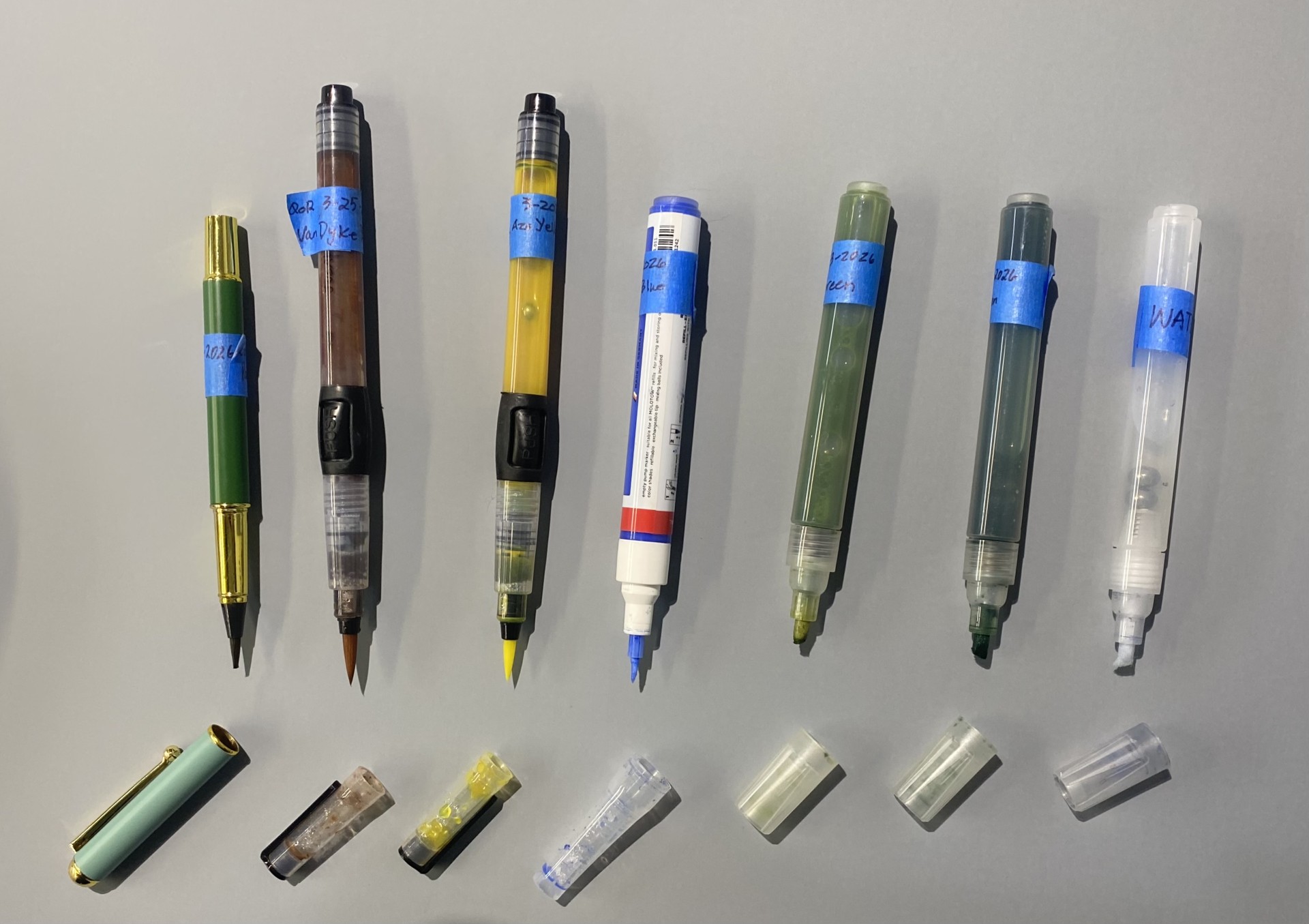
Brush pens and markers in Image 9, listed from left to right:
- Calligraphy pen with converter and brush nib containing diluted QoR Payne’s Gray (PBk7, PB15:3, PV19) (less regular flow and more delicate applications; a bit finicky but worked well )
- JusArt brand brush pen containing diluted QoR Van Dyke Brown (PBr6) (worked well)
- JusArt brand brush pen containing diluted QoR Nickel Azo Yellow (PY150) (drippy)
- Molotow brand paint marker with brush nib, containing diluted QoR Ultramarine Blue (PB29) (worked well, but over time pumping the marker will damage the nib)
- Generic paint marker with chisel nib containing diluted QoR Hookers Green (PY150, PB60, PR122) (worked well for mark making)
- Generic paint marker with chisel nib containing diluted QoR Sap Green (PR101, PY150, PB36) (worked well for mark making)
- Generic paint pen with chisel nib containing water (not used in image10)
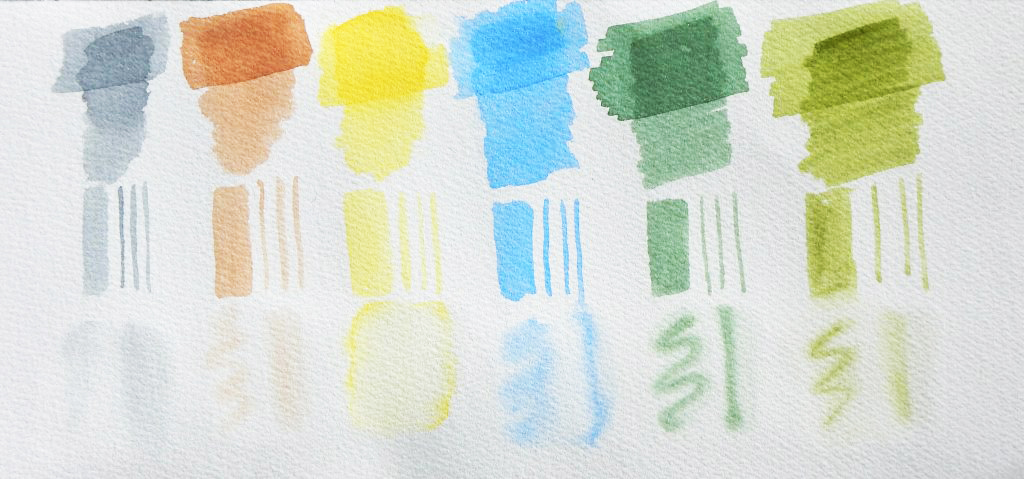
Top row: Brush pen or marker used in angled horizontal marks to create area of color. The overlap lines with the chisel nibs is clear in the two green-filled markers on the right, and less clear in the blue brush nib marker in the center. The gray, brown, and yellow brush pens do not show overlap stroke lines. Once the first layer was dry enough, a second layer was applied the same way.
Middle row: Vertical area and lines for definition and precision
Bottom row: Vertical application onto wet paper (paper wet with a brush in the studio)
Paint Pens and Calligraphy Pens Containing Converters
As you could tell in the testing above, we also experimented with a few inexpensive paint pens and calligraphy pens with brush heads and converters (rather than cartridges). Converters are mechanisms in the barrels that allow the pen to suck up colorant. Since these are made for ink, watercolors with small pigment sizes like those in modern organics like Quinacridone and Phthalo might be less likely to clog the mechanisms.
The mechanics of these pens can be delicate and might not hold up to repeated cleaning and refilling with watercolor. Of those we tested, one worked well, one was finicky but a joy to use, one leaked, and one refused to refill after the initial load of paint had been exhausted. As with a brush holding water in traditional watercolor techniques, a water brush can soften edges, lift color, and dampen areas of the surface as needed. We found inexpensive pens containing converters work well for this need and were not as prone to leaking and dripping as the soft walled ‘water brush’ options.
Storing and Revitalizing Older Markers Containing Watercolor Paint
If markers filled with watercolor are stored a while, the stronger color might overwhelm colors with less mixing power. This may influence the mix’s color and behavior. Pigments can also be reluctant to mix back into solution after storage, no matter how strongly the mixing balls bounce.
When an old mixture refuses to cooperate, it may be possible to rescue the marker’s contents. We revitalized QoR markers containing blends of Ultramarine Blue and either Quinacridone Magenta or Transparent Pyrrole Orange after a year without use. We did this by carefully opening the older watercolor marker, adding a little water and a drop or two of QoR Synthetic Ox Gall, closing the marker back up, and vigorously shaking to allow the paint to remix into the water. Synthetic Ox Gall is a surfactant that breaks surface tension and helps recalcitrant ingredients interact more politely.
After our amendments, the resulting older paint blend flowed from the marker and over wet and dry surfaces with no reluctance. However, in both cases the two colors in the marker no longer separated on wet surfaces like they did initially. In addition, the modern pigments, Quinacridone Magenta or Transparent Pyrrole Orange, came to dominate over the Ultramarine Blue with which they were mixed. What had been a vibrant purple or a chromatic black was now either a reddish purple or a rusty brown.
When all else fails, simply clean the marker or pen and start with a fresh dilution.
Cleaning a Used Marker Containing QoR
A key advantage over acrylic paints in markers is that watercolor can be washed away no matter how long it has dried. This makes it possible to disassemble, empty, clean, and refill a QoR Watercolor marker, even a forgotten one that has been stored for years. We recommend wearing gloves since the process can be messy. Take care when cleaning–if the barrel is turned upside down over a sink not only will the paint go down the drain, so will the mixing balls!
Watercolor lingering in a used nib can be removed by soaking the nib in water or by filling the rinsed marker with water and using it to draw water lines on a piece of absorbent scrap paper. Remember when cleaning that, just as with brushes, some watercolor paints will stain. Nibs might be clean even if they look like they contain paint. A little of this is visible in the gray stains on the water marker nib in Image 9. For ease of marker use, it is good practice to clean the markers out completely now and then rather than store filled markers for a long period of time.
Surfaces to Explore with QoR Markers
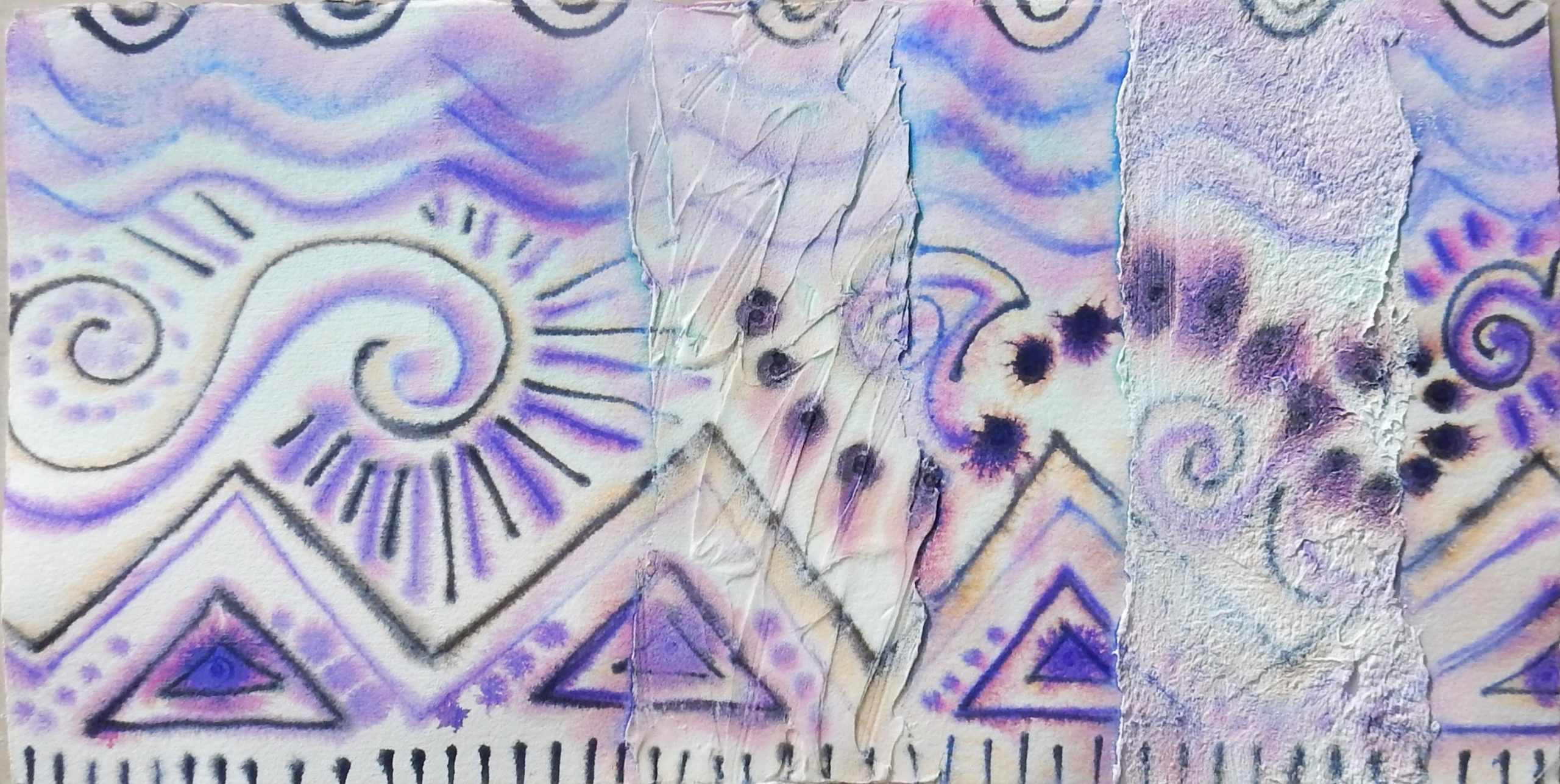
Watercolor in markers offers a way to experiment without pressure, and can open the door to creating on watercolor grounds and synthetic papers like YUPO. Wet and dry synthetic surfaces will behave differently under a marker than watercolor paper does. That difference may allow the freedom to explore without expectations about results. Be aware that rough surfaces can be hard on nibs and brush hairs.
Why Use Watercolor in a Paint Marker?
It is fun and tidy! Using blends of QoR in markers to draw on wet surfaces can be highly enjoyable. Despite the linear application, once on the wet surface the paint will move in unexpected ways just as happens with traditional wet-in-wet watercolor painting. Soft and feathered edges expand with more water on the surface, and drawing again onto the wet surface will darken areas. Tilting the surface is likely to make the water and paint move with gravity.
On dry surfaces, the paint will act like a blend of traditional brush application and marker. Markers can be used to fill areas with color, delineate lines, glaze to intensify color and create darks, and easily make repeated marks. A marker containing only water can soften painted edges just like a wet brush is used in traditional painting. Small bullet tip markers might also be helpful to ‘paint’ signatures. The brush-tip markers and pens are closer to an actual brush application, and handle areas of color with more delicacy.
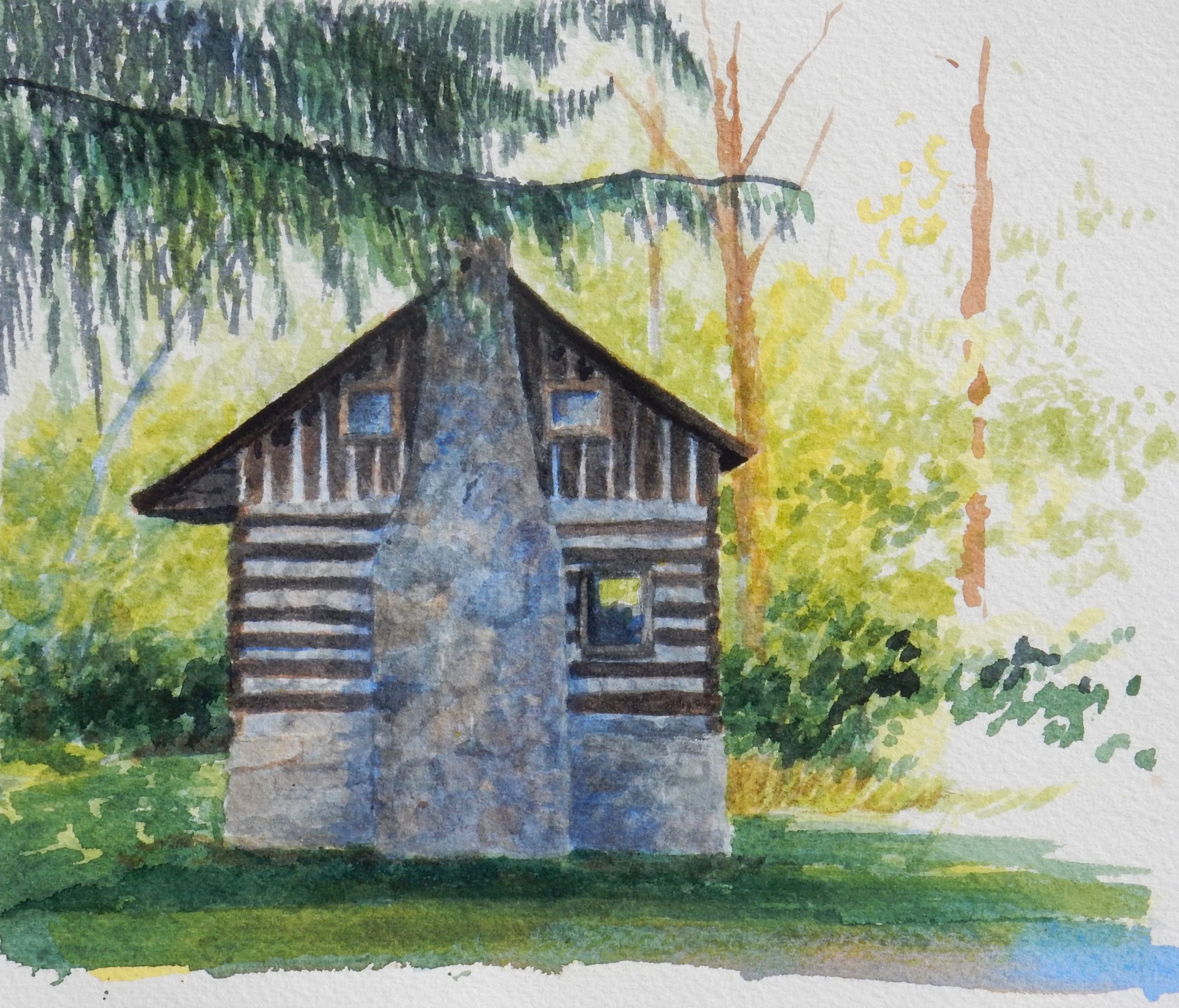
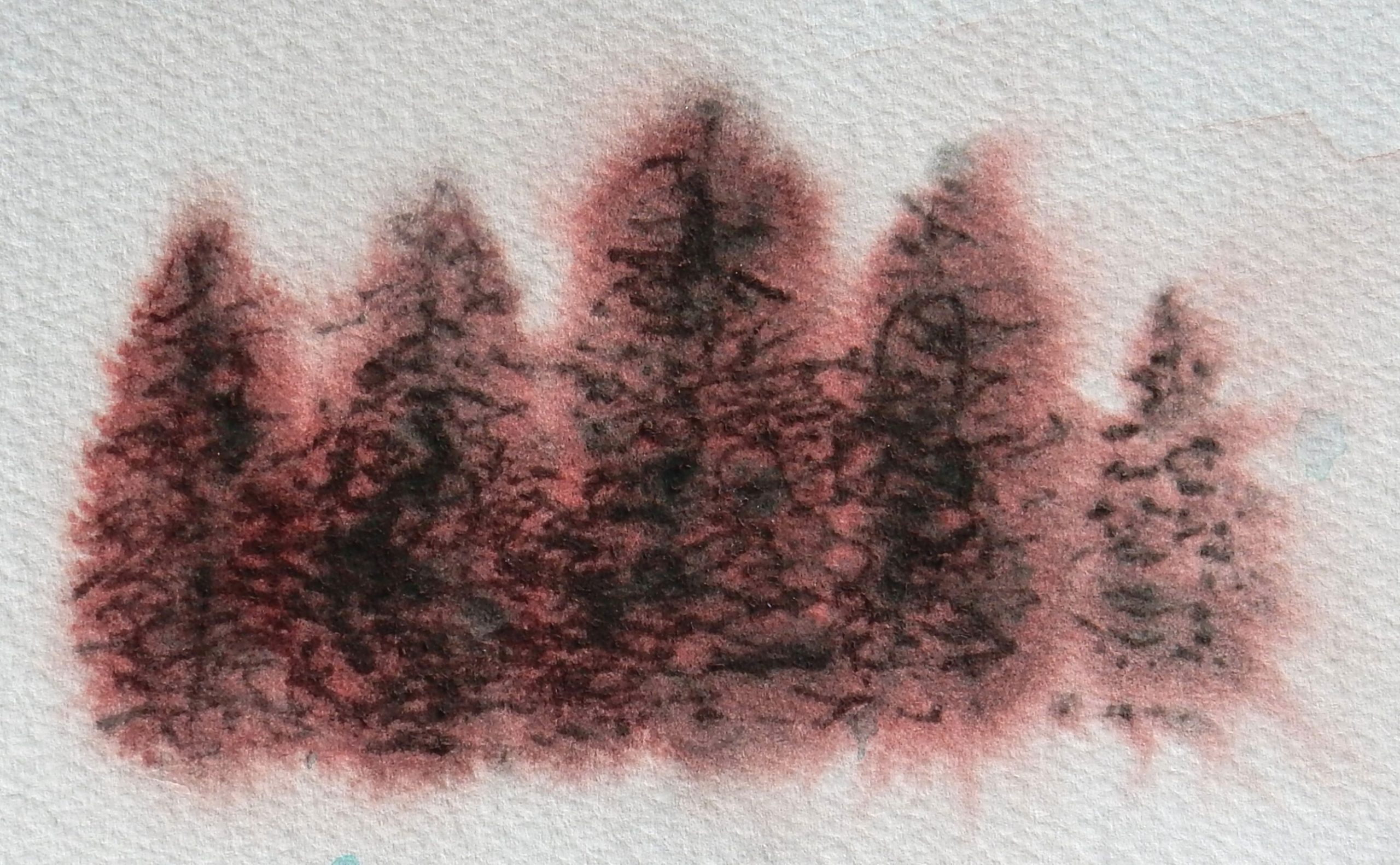
We found the chisel tip markers worked especially well for repeated foliage texture (see Image 1 above). However, evenly applied areas of color on paper were harder to create with both chisel and bullet tip nibs since there is a tendency for the hardness of the nib to bruise the paper when layering over wet paint (see Images 8, 10, and 11 above). This is not an issue on Watercolor Grounds or synthetic papers, which have less sensitive surfaces even when wet.
Beyond the studio
If you plan to use watercolor markers on location, we recommend having at least one brush-style marker or brush pen containing plain water, and of course markers in the colors you might wish to use. It can take some planning when first approaching using watercolor markers on location, and there will be less color flexibility with markers than when using a travel palette. This might be a great time to explore a limited palette of colors—or even a monochromatic palette (Images 13, 14, 15 below).
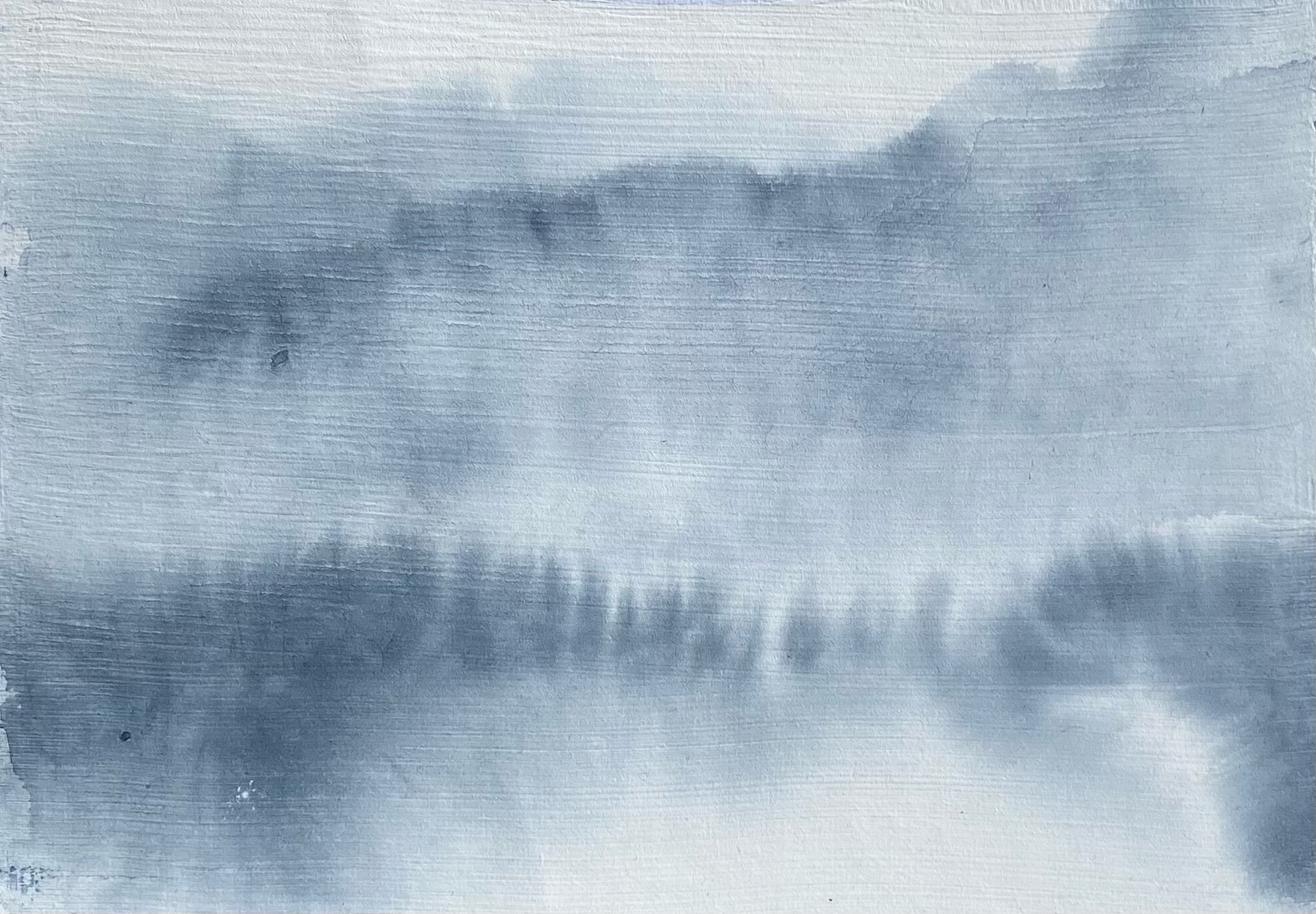
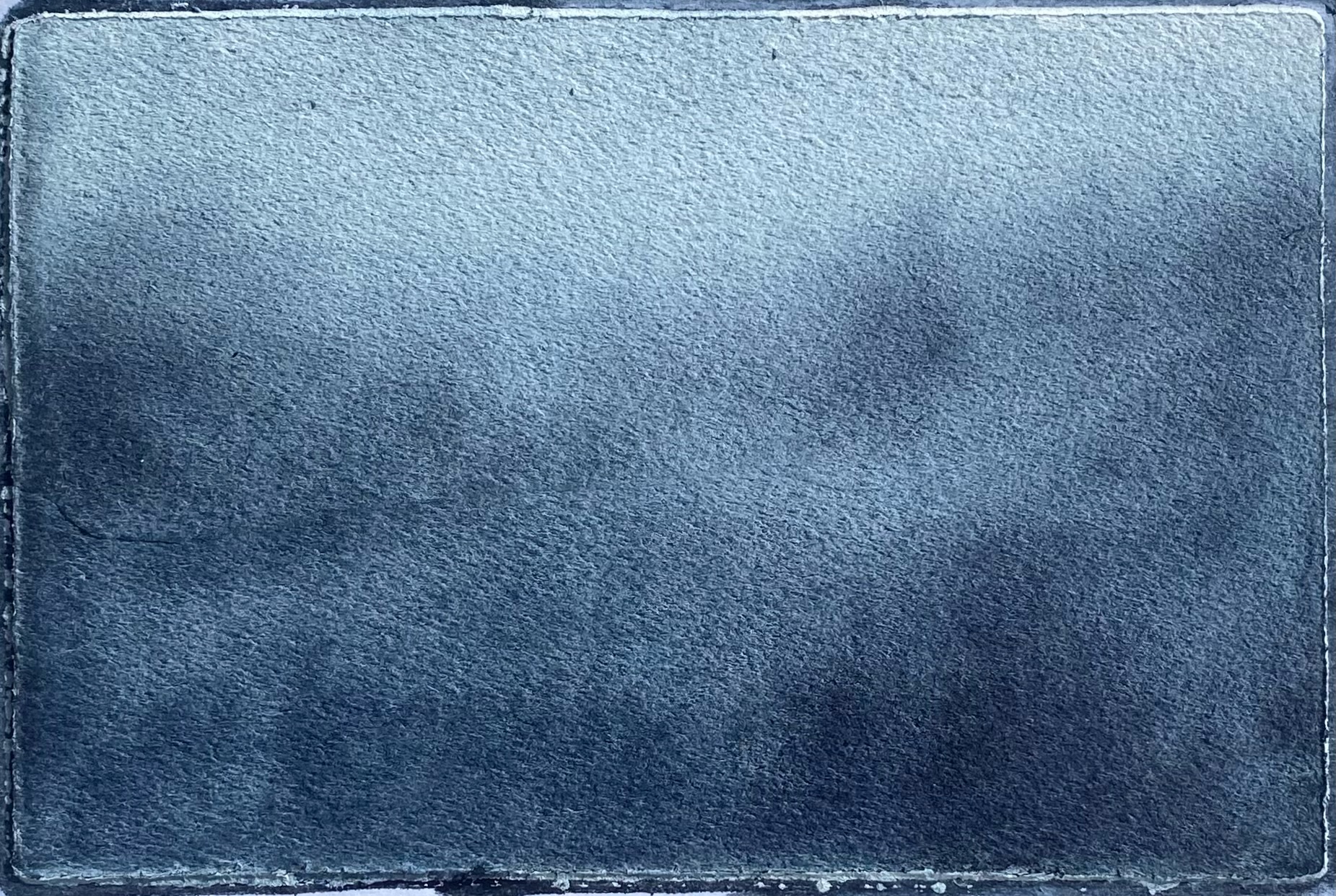
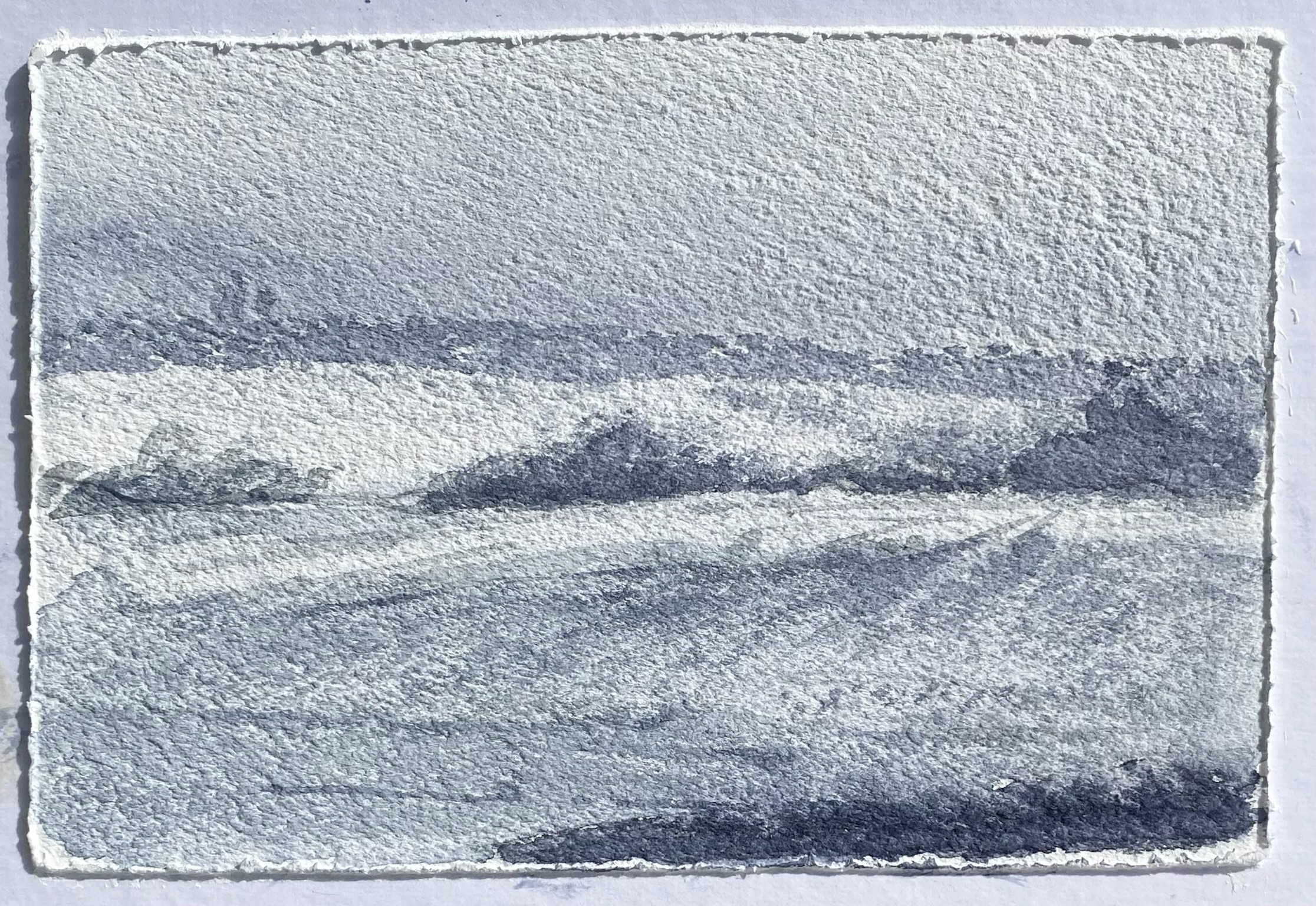
Finally, when working on location, markers are easy to transport and less obvious than a travel palette of paint. We challenge you to give QoR Artist Watercolors in refillable paint markers a try!
Related QoR Artist Watercolor links:
- Online Color Chart for QoR Artist Watercolors (click on a paint swatch and a larger painted example of the color should open)
- Just Paint, Using QoR Watercolor Medium, Synthetic Ox Gall, and Lift Aid
- Just Paint, Lightfast Testing Results for QoR Artist Watercolors Introduced in 2024
- Just Paint, Recent QoR Lightfast Testing (all paints in the QoR line before the 2024 expansion)
- Just Paint, Flattening a Transparent Watercolor Painting on Paper
- Just Paint, Mixing with Some New QoR Watercolors
- Just Paint, Painting on Location with QoR Modern Watercolors
- Just Paint, Limited Palettes: A Color Mixing Approach (includes Golden Acrylics, Williamsburg Oils, and QoR Watercolors)
Related Golden links with High Flow in Markers:
The same tools used for High Flow should work with diluted QoR!
- Golden Video, High Flow Acrylics Paint in Empty Markers (shows many types of markers)
- Just Paint, Markers, Mops, Daubers and GOLDEN High Flow
- Just Paint, High Flow Acrylic Application: Pen and Markers

Subscribe
Subscribe to the newsletter today!
